Download the printable PDF8.5 × 11 in, 2 pages, free
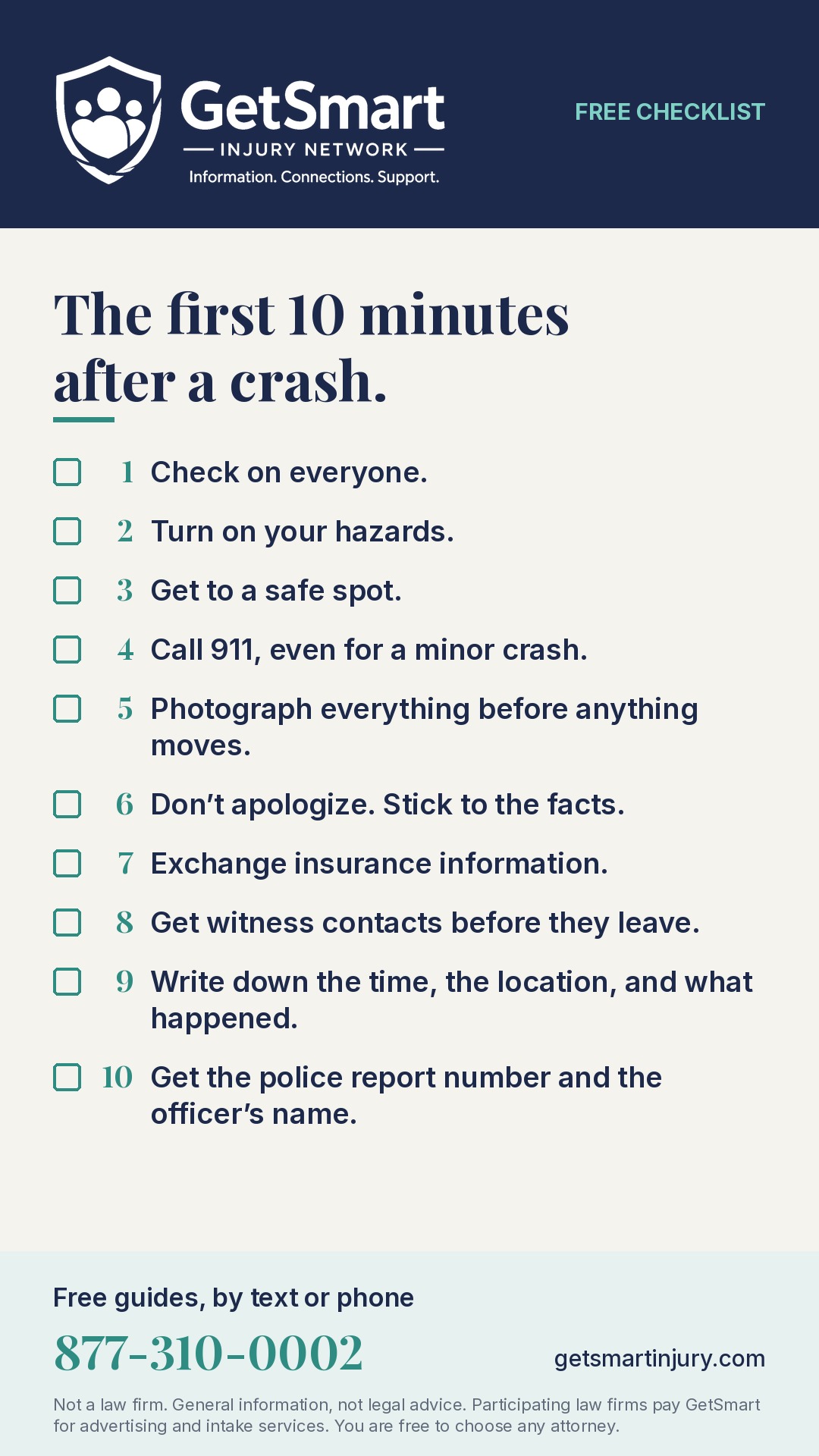
Save the phone versionOne image for your camera roll
The 10 steps, in order
- 1Check on everyone.You, your passengers, and the people in the other car.
- 2Turn on your hazards.
- 3Get to a safe spot.Only if the car moves and it’s safe to. A shoulder or parking lot beats the middle of the road.
- 4Call 911, even for a minor crash.The police report is the neutral record of what happened.
- 5Photograph everything before anything moves.Both cars, all four corners, the street, and the signs.
- 6Don’t apologize. Stick to the facts.“Are you okay?” is fine. “I’m sorry” gets written down.
- 7Exchange insurance information.Photograph their card instead of writing it down: no typos, and the policy number is exact.
- 8Get witness contacts before they leave.A name and phone number is enough.
- 9Write down the time, the location, and what happened.In your own words, while it’s fresh.
- 10Get the police report number and the officer’s name.Before you leave the scene.
Watch the short video
Most people get step 6 wrong. The video walks through all ten steps in under a minute, in the same order as the checklist.
Save the checklist first. In the moment, paper works with a dead phone and shaking hands.
Write it down at the scene
Page 2 of the printable is a fill-in sheet for the details that are hard to remember later:
- Date and time
- Location (street, direction)
- Weather, light, traffic
- Police report number
- Officer name and badge
- The other driver’s name and phone
- Their insurance company and policy number
- Their plate and car
- Witness names and phone numbers
- The 7 photos, checked off
- What happened, in your own words
Download the printable PDF8.5 × 11 in, 2 pages, free
Save the phone versionOne image for your camera roll
Based on general post-accident guidance from NHTSA and the Insurance Information Institute.
General information, not legal advice. Every situation is different — consult a licensed attorney about your specific circumstances.
If you’d like a free consultation with an independent participating law firm, we can connect you.
Looking for more? Browse the free guides.